
3D PRINTERS · 2026
As an Amazon Associate, Shop Friki earns from qualifying purchases.
Best 3D Printers for Beginners in 2026: From a Desk-Size Starter to an Enclosed Workhorse
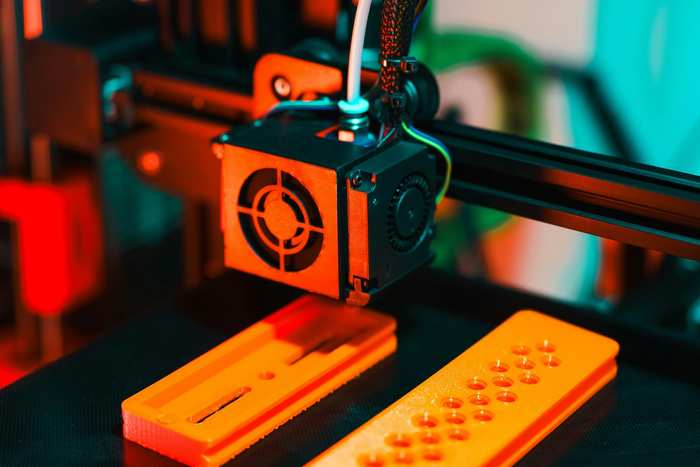
Every family has a guy who says he’s going to get into 3D printing. He says it at Thanksgiving, then at Christmas, then at the Fourth of July while holding a hot dog. Three years later he still hasn’t bought one, because every time he looks he hits a wall of forum posts about bed leveling and steppers.
Here’s the good news for that guy, or for whoever is buying his gift: printers got easy. Most of these five level themselves, calibrate themselves and connect to an app. The hardest part now is picking what to print first. These are the five worth your money, from a little starter that fits on a desk to a fully enclosed machine that can print the tougher stuff.
Bambu Lab A1 mini Combo (with AMS lite)
If you’re starting from zero, start here. The A1 mini prints in a 180 x 180 x 180 mm space, about the size of a big coffee mug’s neighborhood. It runs a full auto calibration before you print, so there’s no paper-under-the-nozzle routine. Bambu also built in Active Flow Rate Compensation, which keeps the plastic flowing evenly so your surfaces come out cleaner.
The Combo adds the AMS lite, a spool holder that feeds up to four colors. You can print a multicolor figure without swapping anything by hand. Bambu rates it as low as 49 dB, quiet enough that your roommate won’t knock on your door. The catch: the open frame is made for PLA, PETG and TPU, not for the hot, smelly stuff like ABS. For a first printer, that’s fine.
Creality Ender-3 V3 SE
The Ender-3 has been the training-wheels printer for years, and this version finally took the training wheels off. It gets a 220 x 220 x 250 mm build space, bigger than the A1 mini. It uses a CR Touch probe plus a strain sensor to handle bed leveling and Z offset for you, and that used to be the step that made people quit the hobby on day two.
The Sprite direct-drive extruder handles PLA, PETG and flexible TPU. Dual Z-axis screws keep the gantry from wobbling. Creality lists it at up to 250 mm/s. Heads up: it ships as a kit you put together. It’s simple, but it isn’t plug and play like the Bambus. If the person you’re buying for likes tinkering, that’s a feature.
Bambu Lab A1 Combo (with AMS lite)
This is the A1 mini, grown up. Same idea: auto calibration, flow control, motor noise cancelling and app-based printing from MakerWorld’s model library. The build space jumps to 256 x 256 x 256 mm. That’s big enough to print a helmet in one piece, which Bambu literally brags about, and I respect that.
This Combo comes with the AMS lite in the box, so four-color printing works on day one. Like the mini, it’s an open-frame printer made for PLA, PETG and TPU. Bambu doesn’t recommend putting it in an enclosure, so don’t. Get this one over the mini if the person you’re shopping for already knows they want to print big stuff, like cosplay pieces, storage bins or a life-size whatever.
ELEGOO Mars 5 Ultra (Resin)
Filament printers are great, but if your guy paints miniatures, this is the one. Resin printers cure liquid resin with light, layer by layer, and the detail is on another level: faces, chain mail, tiny dragon scales. The Mars 5 Ultra uses a 7-inch 9K mono screen. Per the listing it adds automatic leveling, smart detection and Wi-Fi file transfer. The build space is about 6.04 x 3.06 x 6.49 inches, which is plenty for a whole squad of minis.
Reviewers point to its tilt-release design, which peels each layer off gently instead of yanking it. The honest caveat: resin is messier than filament. You need gloves, good ventilation, and a wash-and-cure step after every print. If they’re ready for that, pair it with our pick for resin that doesn’t fight you.
Bambu Lab P2S
This is the one for someone who already caught the bug. The P2S is fully enclosed, which helps with materials like ABS and ASA that hate drafts. It has the same big 256 x 256 x 256 mm build space as the A1. Bambu’s servo extruder pushes up to 70% more extrusion force than the last generation.
It adds a 5-inch touchscreen, a 1080p high-frame-rate camera with AI error detection that can catch a failed print before it turns into a bird’s nest, and dual-band Wi-Fi. This listing is the printer on its own; the AMS 2 Pro for multicolor is a separate add-on. The enclosure doesn’t actively heat, but it holds heat in. It’s the most printer on this list, and you’ll feel that when you open the box.
Here’s the cheat sheet. For a first printer, get the A1 mini. If they like building things, get the Ender. If they want bigger prints, get the A1. If they paint minis, get the Mars 5 Ultra. If they’re already hooked, get the P2S. Whichever you pick, buy a spool or a bottle of resin with it, because nothing kills Christmas morning like a printer with nothing to print. Our nerdy stocking stuffers list has more ideas for the same person.